How AI Put Our Company Into BAKUSOKU Mode
Hi, I’m @ramenshim, CTO of AnotherBall.
As we approach the end of the year, I’d like to look back and share how we accelerated our company into “Bakusoku Mode” with AI from April to June.
“Bakusoku” — a Japanese term meaning “explosive speed,” or moving fast and decisively — captures the spirit of how we pushed our organization forward.
We’re a ~30-person team, and before these initiatives only a handful of people used AI. A quick Google Form survey revealed:
- Some teammates were still on the free tier of ChatGPT.
- Some had never touched any AI tool besides ChatGPT.
That was a bit of a shock. But it was obvious to us that AI would boost productivity. After we ran a set of company-wide initiatives, people started to say:
- “I now start work with AI in mind.”
- “I can tell what AI can and cannot do.”
- “Let’s try it with AI first.”
This mindset shift was especially impactful for non-engineering roles (marketing, HR, back office, etc.). Here’s exactly what we did.
What We Did to “Bakusoku” the Company
1. Set a slogan — Bakusoku AI 10x

Falling behind on AI is a big risk for a speed-driven startup.
To flip the mood fast, we launched the slogan “Bakusoku AI 10x,” which means “take on challenges 10x faster with AI.” (It’s an homage to Yahoo! JAPAN’s famous “Bakusoku Keiei / Explosive-Speed Management.”)
It might sound like “just a slogan,” but stating it clearly sent a strong message: this isn’t half-hearted; it’s a full-company commitment.
2. Create spaces to talk about AI
Alongside the slogan, we built regular spaces to talk about AI inside our routines: internal lightning talks on good use cases, and hands-on workshops for specific tools.
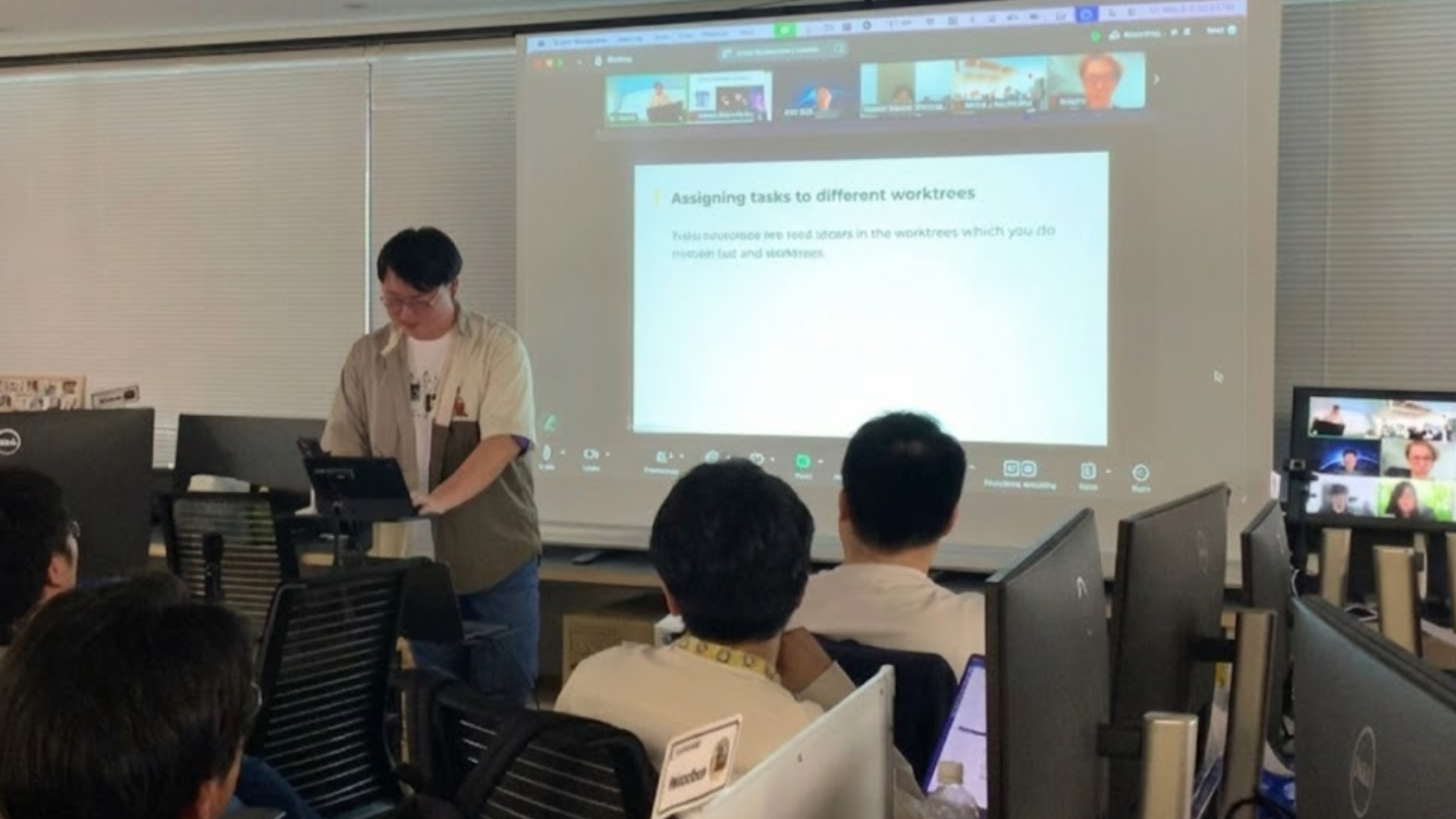
The most effective was AI Mingle. At morning check-ins, we split into groups of 2–3 and each person shared how they used AI the day before in two minutes. The thought of “I want something to share at AI Mingle” (and “I don’t want to show up empty-handed”) helped people build a daily habit of using AI.
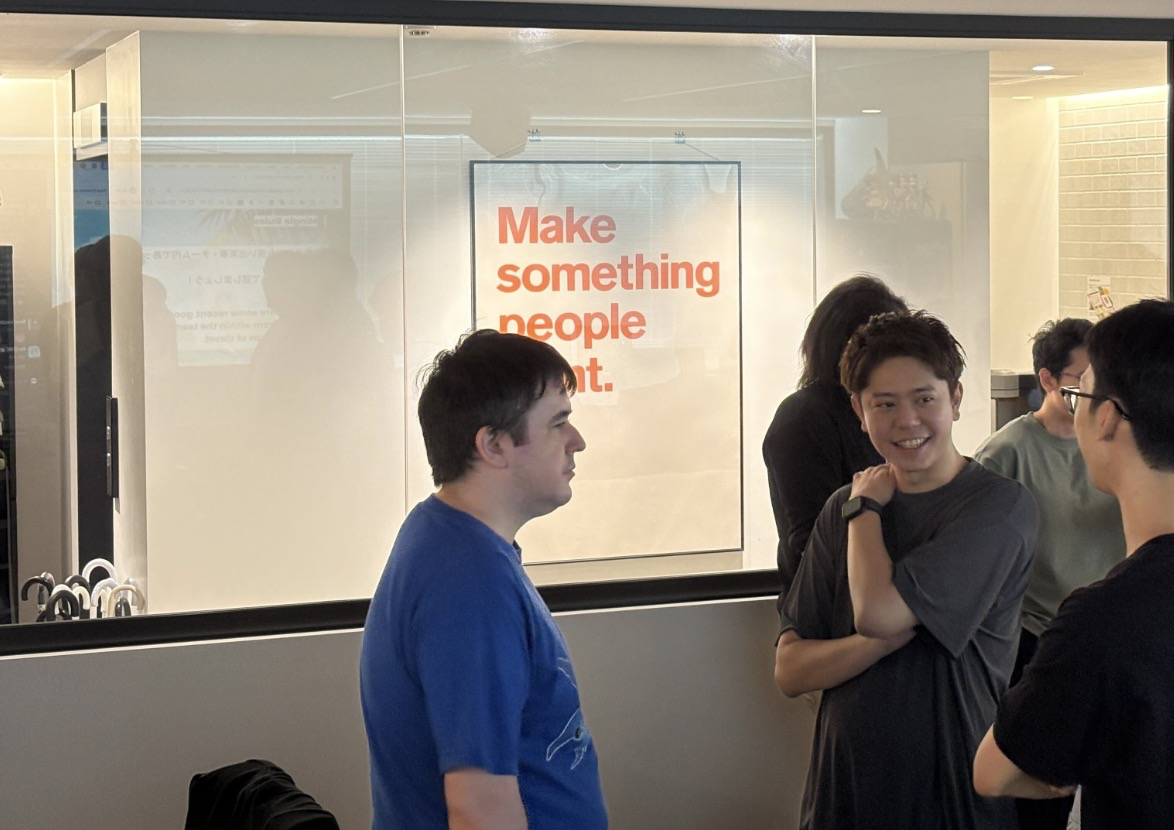
This tied tightly to the slogan, too. When someone shared a clever use, teammates could say “That’s Bakusoku!” Having a space where that language gets used made the slogan stick.
We also opened a Slack channel, #random-ai-lab, so even remote members could asynchronously share their day-to-day AI usage.
3. Celebrate AI usage
We wanted to praise AI adoption both top-down and peer-to-peer. So leadership picked one post every day to spotlight and celebrate, cheering on AI usage across the org.
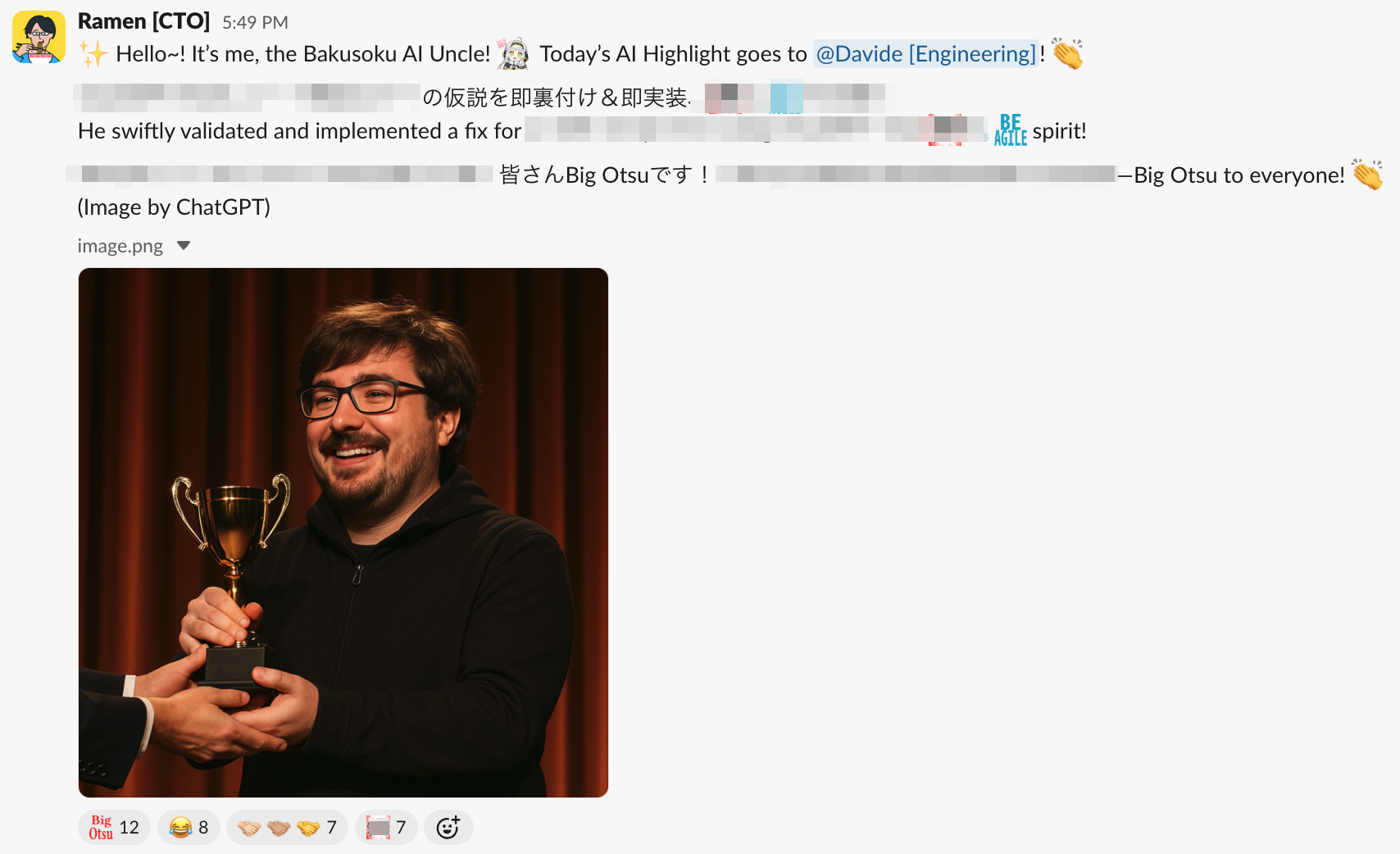
At the same time, we introduced AI HEROs: anyone who used AI creatively received a “Bakusoku AI 10x” sticker. Because coworkers could give and receive stickers freely, it combined:
- The experience of being praised (“That workflow is awesome! Very Bakusoku!”)
- The fun of collecting stickers, almost like a game
It became a neat motivation loop.
4. Solve real workflows together
Some people naturally took off with AI after these steps, but others — like back office or marketing — still struggled to see how to apply it.
So teammates who were strong with AI paired with them to tackle concrete tasks together.
For example, in the Social Media team, planning, outlining, and post-analysis were very person-dependent. We built a Cursor-based workflow together that ran the whole process from ideation to analysis. This cut planning effort and improved analysis depth. It may look scrappy and unscalable, but once one team succeeds, others copy and teach each other — so it was well worth doing.
How we measured it
It’s hard to quantify “AI adoption,” so we set two quarterly goals:
- 100% of members publish something AI-related (an LT or a post to #random-ai-lab).
- At least 5 posts per day in #random-ai-lab, continuously.
For me, “company-wide AI adoption” means everyone becomes an originator, not just a consumer — that’s why we set #1. And we needed #2 to make sure organic, spontaneous posts kept happening.
We hit both: 150 posts in 20 business days (7.5 per day).
Qualitatively, awareness shifted, too. By the end of the quarter:
- People started work assuming AI is part of the process.
- They gained a feel for what AI can and can’t do.
- “Let’s try it with AI first” became a natural phrase.
Each team is now improving workflows, and AI usage is evolving from individual hacks to a company culture.
Resources we used
This effort was driven by two people — myself and our org development lead — and was only possible because leadership committed and passionate members stepped up. Leaders became the “first dancers” for AI, created “second dancers” via programs and 1:1 support, and the rest naturally followed.
Tools and budget
Here are some tools we currently subsidize for teammates:
- Canva
- ChatGPT (Codex)
- Claude (Claude Code)
- Cursor
- Gemini
- Grok
- Manus
- Notion AI
Some were adopted bottom-up. When someone proposes a tool, we subsidize a small pilot for those who want to try it, then roll it out wider if it works — lowering the barrier to experiment. Budgets are case by case; we don’t pre-commit a big pool. We also avoid annual contracts because models and tools evolve so fast.
Wrap-up
AI adoption doesn’t become culture through policies or tools alone.
- Set a company-wide slogan.
- Create spaces to talk about AI.
- Celebrate AI usage.
- Tackle real workflows one by one.
By stacking these every day, we steadily moved toward an org where using AI is normal.
Join us
In this post, I shared the initiatives we implemented in the first half of the year to drive AI adoption. I look forward to introducing what we’ve been working on since the summer on another occasion.
AnotherBall is hiring people who want to leverage the latest tech and take Japanese entertainment culture global. We’re actively recruiting — check out our openings and help us build products that win worldwide.
Thanks for reading — brought to you by @ramenshim!